Most people who fly into Kathmandu remember the same moment. Somewhere over the Himalayas, the clouds break and the mountains are suddenly right there, closer and larger than any photo suggested. It tends to be the moment a first trip to Nepal becomes a second one.
What Nepal actually offers
Nepal holds eight of the world's ten highest mountains, including Everest, but that is only one part of it. In a country roughly the size of Bangladesh, you get over 120 ethnic groups and languages, temple complexes in Kathmandu that predate several European nations, jungle terrain in the south with wild rhinos and Bengal tigers, and hill villages where the day still runs on farming hours rather than clocks.
You can be at 5,000 metres before lunch and eating dal bhat in a stone farmhouse by dinner. That range, in a single trip, is what sets Nepal apart from most other Asian destinations on a first-timer's list.
The trip highlights worth building your itinerary around
Everest Base Camp The best-known trek in the world, and still realistic for a fit, well-prepared traveller with the right guide. Twelve to fourteen days round trip is standard.
Annapurna Circuit and Poon Hill Often rated more varied than Everest Base Camp by people who have done both, with a shorter, more accessible option in the Poon Hill sunrise trek for those on a tighter schedule.
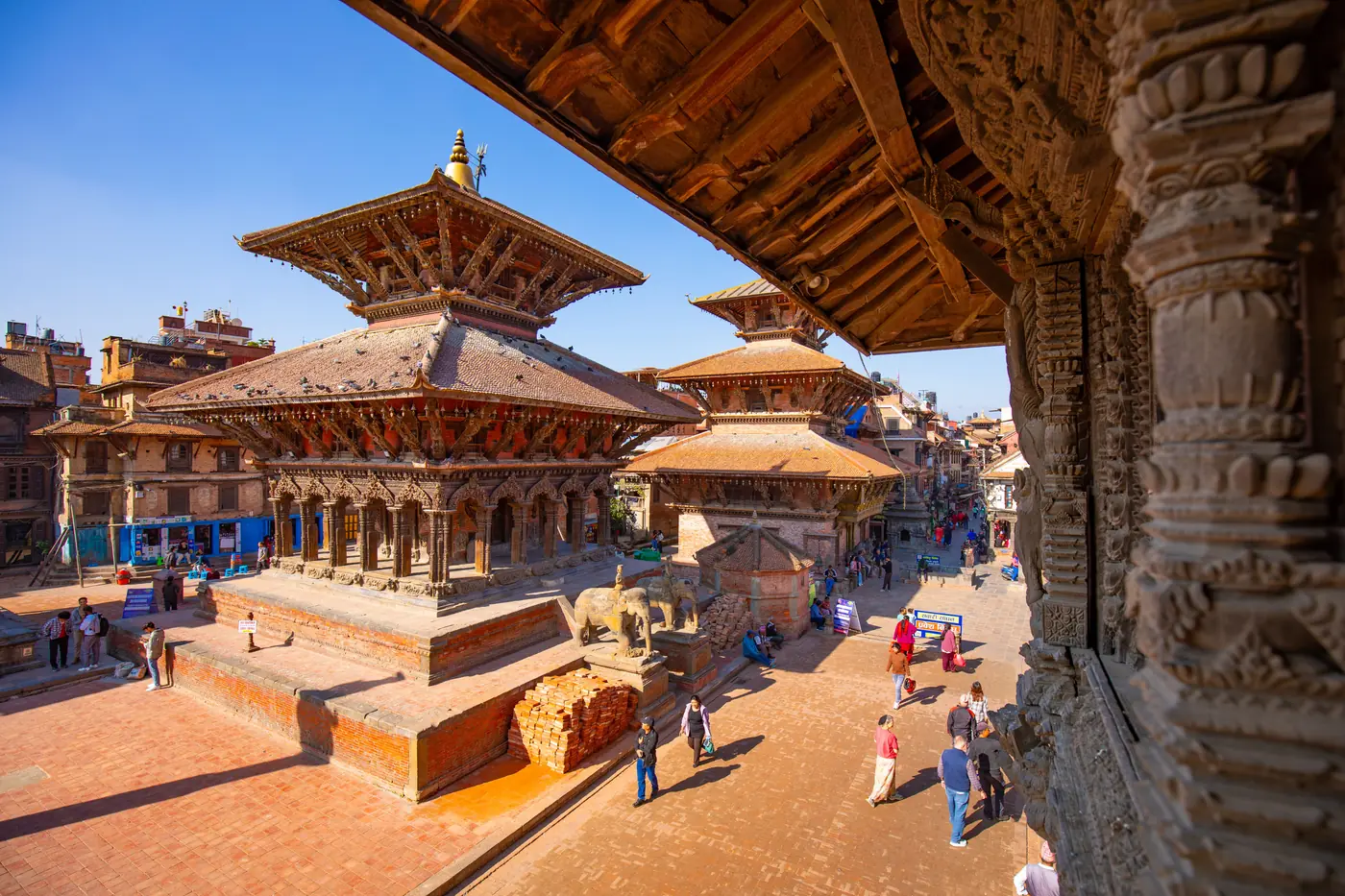
Kathmandu's Durbar Squares Three separate palace and temple complexes across the valley, still in daily religious and civic use rather than preserved behind rope lines.
Pokhara and Phewa Lake Nepal's base for a slower few days, with Machapuchare mountain reflected in the lake and paragliding launch points above the town.
Chitwan National Park Jungle safari territory in Nepal's lowlands, home to one-horned rhinos and a very different landscape from anything in the mountain regions.
When to go
September to November is Nepal's clearest and most reliable season, with stable weather and two major festivals, Dashain and Tihar, usually falling within this window.
March to May brings warmer trekking conditions and rhododendron blooms across the mid-hills, making it the second prime trekking season.
December to February works for travellers prioritising quiet trails over comfort, since high-altitude routes get cold, but Kathmandu and Pokhara stay pleasant.
June to August is monsoon season. Trekking routes get muddy and visibility drops, so this window suits cultural and valley-based travel over high-altitude trips.
Getting there
Australian travellers typically connect through Kuala Lumpur, Bangkok, Singapore or Delhi into Kathmandu, since there are no direct flights from Australia. Nepal issues visas on arrival for Australian passport holders, which covers the visa side without advance paperwork.
The part that trips people up is usually everything after the flight lands: matching a trek to actual fitness level and time available, sorting out which permits a specific route requires, and finding a guide who knows the current trail conditions rather than last year's.